

The richest and poorest passengers of Titanic: A ship that sank in the North Atlantic Ocean in 1912, which still has many curiosities in people’s minds even after a century. Yes, you are right. Here we are talking about the Titanic ship. The ship that was announced after its discovery that it would never be sunk. Due to the fate of time and the cruel reality, one day that Titanic also had to sink in the bottomless sea. But you would be surprised to know the balance of the presence of noble class people and third class people on this ship. Many of us guessed after watching the movie Titanic. But the reality is that these two classes of people were going to America on this ship for different purposes. The first class people were also going to explore America. And the third class passengers were going to America with a dream in their eyes. But strangely, except for a few, none of the rest were lucky enough to survive. There is a sharp disparity between the rich and poor passengers in the life inside the Titanic. From food, housing, entertainment to security, class differences were evident in all areas.

Titanic: Luxury vs. Ordinary
The richest and poorest passengers of Titanic gives inequality map to us. The Titanic was a ship that had a royal party, a restaurant, a swimming pool, a library, a play area, a smoking room, etc., and other special places. Only the noble class of people on the Titanic were allowed to enter. Most of the people in this class were famous judges, barristers, businessmen, industrialists, and other special people in Europe. They had the right to enter any place on the Titanic at will. They did not have to answer to any gatekeeper when they wanted to enter any place. On the other hand, the third class of people on the Titanic did not have the right to enter all these special places. They had very ordinary cabins that they shared with multiple families. There was even special discrimination in food. When people in this class tried to enter any special place on the Titanic, the gatekeeper would first stop them. Then, if they received a suitable answer or permission to enter, the gatekeepers would let them in. This shows how much the inequality between the two classes on the Titanic was a living document at that time.
Introduction to the rich passengers
One of the richest businessmen among the first class passengers was John Jacob Astor IV. He was one of the richest people in Europe at that time. Also, from the Titanic family, Benjamin Guggenheim, Isidore and Ida Strauss (owners of Macy’s Department Store), and other famous millionaires were passengers. They were traveling in a luxurious environment on the Titanic where everything was within their reach. In addition to the rights in each special place, all the surroundings were perfectly arranged for them. When you enter these special places made for them, you may feel like you have stepped into some unknown paradise, not on a ship called the Titanic.
Introduction to Poor Passengers
On the other hand, the third class passengers were mainly poor immigrant families. They were going to America from various European countries including Ireland, Italy, Sweden in search of a new life. Most of them were going to America in search of new dreams. Since there was a financial collapse in Europe at that time, many people were unemployed. These third class people on the Titanic participated in this discrimination in a cruel irony of fate. Until the day before the Titanic sank, these poor passengers went through the cruel veil of society. Where the upper class repeatedly pointed their fingers in their eyes to indicate that they were only the deprived and backward class in this society. Therefore, when the Titanic sank, the third class passengers suffered the most casualties. Now you can understand the richest and poorest passengers of Titanic how significant were the signs of social inequality.

Differences in food and lifestyle
The class disparity between the richest and poorest passengers of Titanic was even more pronounced in terms of food. Needless to say, the food of the first class people on the Titanic also had many luxuries that the third class people could not enjoy. The cooking of the first class people consisted of many luxurious dishes. There was caviar, champagne, various types of meat and fish. At any time, they would have wine or liquor from very expensive companies with them. On the other hand, there was ordinary food for the third class people. Such as simple soup, bread, potatoes and other foods that they had to eat to fill their stomachs. Even if they wanted to, the first class people of the Titanic did not have the right to eat. Even if they wanted that food, they had to buy it at an additional price. Even another thing that discriminated between the two classes of people was the seating arrangement. The first class passengers had the right to sit on chairs on both sides of a huge long table. On the other hand, the third class passengers had to share their food with their families in their cabins or in small spaces.
Class distinction during the disaster
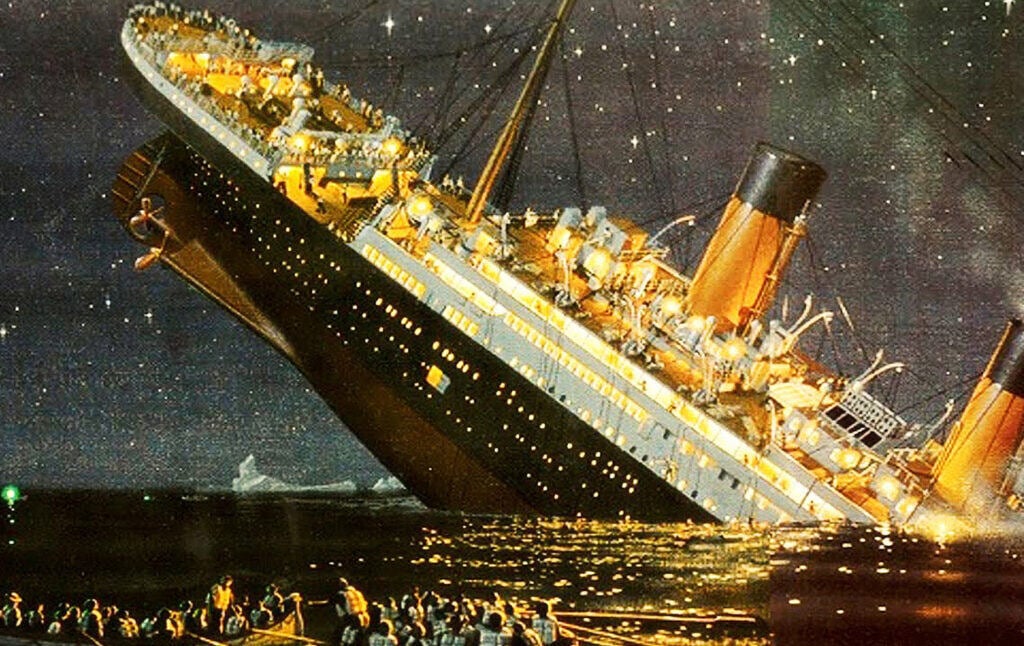
Strangely, when the Titanic hit the infamous iceberg, its farewell bell started ringing. At this time, the class distinction became more apparent under the darkness of the night. It can be seen that the first class passengers were getting relatively more benefits for boarding the lifeboats. The porters and police were more focused on making it easier and faster for the privileged first class to get to the lifeboats. On the other hand, the third class passengers were forced to be locked in a cage so that they could not have that privilege. As a result, the third class people suffered the most. About 75 percent of the third class passengers died after the Titanic sank. On the other hand, 59 percent of the second class people survived and only 38 percent of the first class passengers died. This report alone shows how pronounced the racial and class discrimination on the Titanic was.Therefore, class discrimination was also seen between the richest and the poorest passengers of Titanic at the time of death also.


Conclusion
The experience of the richest and poorest passengers of Titanic proves that class differences can affect not only social life, but also the way they face death. While the rich passengers had an abundance of luxury, endless supplies of security, and an unprecedented combination of food, the poor were only subjected to humiliation and neglect. And in the history of Europe, the racism in the Titanic reveals the mental cruelty of the people there. This cruelty was even more evident during the sinking of the Titanic. This tragedy still reminds people today of the power, necessity, and classlessness of humanity. If there had been more people and animals, perhaps many more people would have survived that day.