
AI, or Artificial Intelligence, is currently revolutionizing various sectors globally, and one of the most critical is AI in drug discovery. Traditionally, creating new drugs has been an incredibly long, expensive, and laborious process. It typically takes about 10-15 years to bring a new drug to market, costing billions of dollars. This extensive process involves understanding disease causes, identifying potential targets, testing thousands of chemical compounds, conducting clinical trials, and securing regulatory approval. AI in drug discovery has emerged as a game-changer, accelerating and streamlining this complex endeavor. With AI in drug discovery, scientists can now identify potential drug candidates much faster and more accurately, predict their effectiveness, and anticipate side effects.
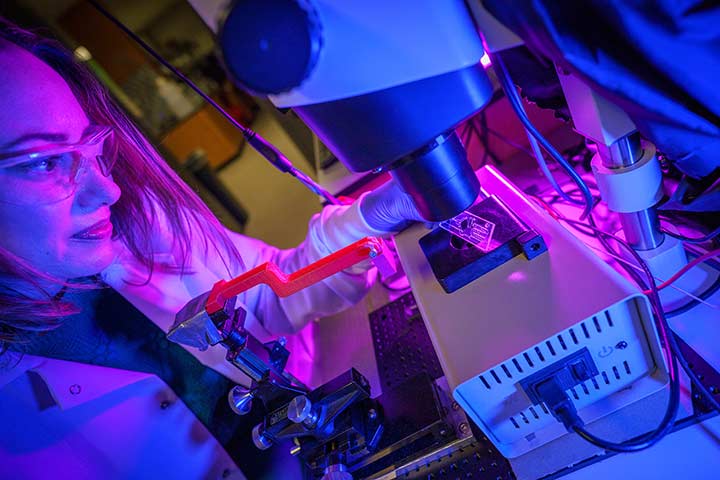
Artificial intelligence primarily operates on data analysis and pattern recognition. In the context of AI in drug discovery, AI models are capable of analyzing vast amounts of data, including genomic information, protein structures, chemical compound characteristics, clinical trial results, and scientific research papers. From this data, AI in drug discovery uncovers hidden patterns and relationships that are almost impossible for humans to identify. For example, an AI in drug discovery model can select from millions of chemical compounds those that are most likely to bind effectively to a specific disease target. This not only saves time but also helps identify potential drug candidates that might have been overlooked using traditional methods.
Applications of AI in Drug Discovery
The extensive application of AI in drug discovery is evident in every step of the process:
- Target Identification and Validation: The first step in creating new drugs is to identify the biological targets (such as proteins or genes) associated with the disease’s root cause or pathway. AI in drug discovery, particularly machine learning and deep learning algorithms, helps pinpoint disease-related targets by analyzing large volumes of genomic, proteomic, and clinical data. Through this data analysis, AI in drug discovery can uncover biological targets that play a crucial role in disease progression and where drug intervention can yield effective results. For instance, AI in drug discovery can identify specific genetic alterations in cancer cells that could be suitable drug targets. This saves time and helps reduce research failure rates by selecting the right targets.
- Drug Candidate Generation and Optimization: Once a target is identified, the next challenge is to find chemical compounds that can effectively interact with it. Generative AI in drug discovery models, such as Generative Adversarial Networks (GANs) and Variational Autoencoders (VAEs), are capable of designing novel chemical compounds with desired properties. These models learn from existing data to create new molecules that can specifically bind to the target and produce the intended therapeutic effect. Furthermore, AI in drug discovery can predict the efficacy, stability, and toxicity of potential drug candidates, thereby reducing the number of laboratory experiments and saving time and money.
- Clinical Trial Optimization: Clinical trials are an essential and costly step before new drugs can be brought to market. AI in drug discovery plays a significant role in the design and implementation of clinical trials. AI in drug discovery helps identify potential patients who are most suitable for trials, which increases trial efficiency and reduces timelines. Additionally, AI in drug discovery can analyze patient data to predict the potential side effects and effectiveness of a drug. As a result, trial durations can be shortened, and the risk of failure is reduced. For example, AI in drug discovery can select patients who are more likely to respond well to the actual drug rather than a placebo, thereby increasing the chances of trial success.

- http://discovery models make their decisions—the “explainabilityhttp://discovery models make their decisions—the “explainabilityhttp://Scientists want to knowhttp://Scientists want to knowDrug Repurposing and Combination Therapy: Often, drugs used for a particular disease can also be effective in treating other conditions. This is known as drug repurposing or recycling. AI in drug discovery can analyze data from existing drugs, such as their chemical structure, biological activity, and side effects, to identify their potential use for new diseases. This helps deliver effective treatments to patients quickly by bypassing the long and expensive process of developing new drugs from scratch. Moreover, AI in drug discovery can predict the potential effectiveness and safety of combining different drugs, which is instrumental in the development of combination therapies. This is particularly crucial in the treatment of cancer and infectious diseases, where a combination of multiple drugs is often more effective than a single treatment.
Challenges and Future Prospects
Despite the bright future of AI in drug discovery, some challenges remain. The lack of high-quality and reliable data is a major hurdle, as AI in drug discovery models require vast amounts of well-structured data to make accurate predictions. Additionally, understanding how AI in drug discovery models make their decisions—the “explainability of AI models”—is a significant concern. Scientists want to know why an AI in drug discovery model has chosen a particular drug candidate, so they can understand the biological rationale behind those decisions. Nevertheless, continuous advancements in AI in drug discovery and machine learning technology are helping to overcome these challenges. Future AI in drug discovery processes will become even faster, more affordable, and more effective, paving the way for numerous new life-saving treatments.
In summary, AI in drug discovery is revolutionizing the entire drug development process, adding new dimensions to every step, from target identification to clinical trials. It is not only accelerating the discovery of new drugs but also bringing novel treatment approaches for diseases that currently lack effective remedies. Through AI in drug discovery, we are moving towards a future where drug discovery will be more precise, rapid, and effective, representing a monumental step forward for human health.