
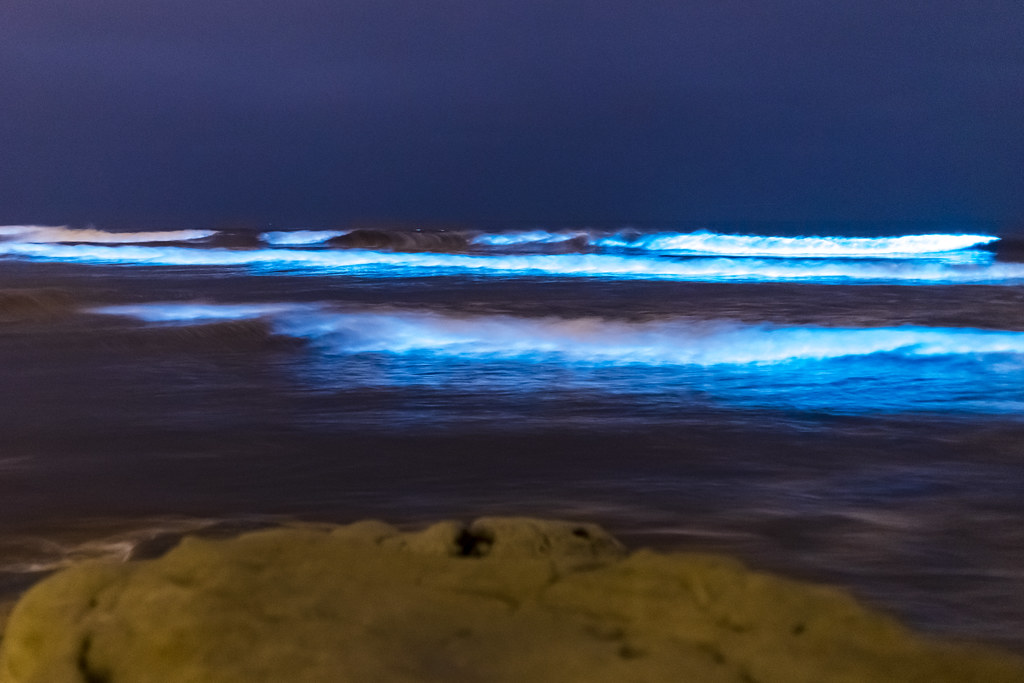
In some rare places on Earth, an extraordinary magic of nature is found—where in the darkness of the night, the seawater itself shines with light. This incredible phenomenon is known as bioluminescence, and it is found on islands like the Maldives or Puerto Rico, which have earned these coastal areas the designation of ‘bioluminescent beaches’ or ‘glowing beaches’. These bioluminescent beaches, shimmering in the dark, offer tourists a strange and enchanting experience, allowing them to witness a miraculous scene on the seashore at night.
The source of this natural light is single-celled marine organisms, especially the dinoflagellates. When these microorganisms are disturbed—for example, by waves, the movements of a swimmer, or a boat passing through the water—they produce light through a chemical reaction as a defense mechanism. This light is usually blue or greenish and creates a magical glow in the seawater, as if a galaxy of stars has descended into the water. This event is a wonderful creation of nature, a captivating combination of science and imagination, making for truly unforgettable bioluminescent beaches.
The Science of Bioluminescence: The Light of Tiny Life
Bioluminescence is a chemical process by which living organisms produce light. It’s not only seen in certain marine creatures but also in some insects (like fireflies), fungi, and deep-sea fish. The primary reason for the brightness observed on bioluminescent beaches is dinoflagellate plankton. These single-celled microorganisms absorb sunlight during the day to store energy, and at night, when excited by an external force, they convert that energy into a chemical reaction that produces light.
For the production of this light, a protein called luciferin and an enzyme called luciferase are involved. When the dinoflagellates are agitated, the luciferin reacts with oxygen in the presence of the luciferase enzyme, releasing energy that is reflected as visible light. This process is known as “cold light” because it produces very little heat. This extraordinary ability of these tiny organisms is used for their defense and communication within the marine ecosystem, creating the spectacular glow of bioluminescent beaches.
Where in the World Are These Bioluminescent Beaches Seen?
These bioluminescent beaches are found in several places around the world, but some locations are especially known for their brilliance. The Bioluminescent Bay in Vieques Island, Puerto Rico, also known as Mosquito Bay, is considered one of the world’s brightest bioluminescent bays. The concentration of dinoflagellates here is so high that even a slight movement of water creates a dazzling burst of light.
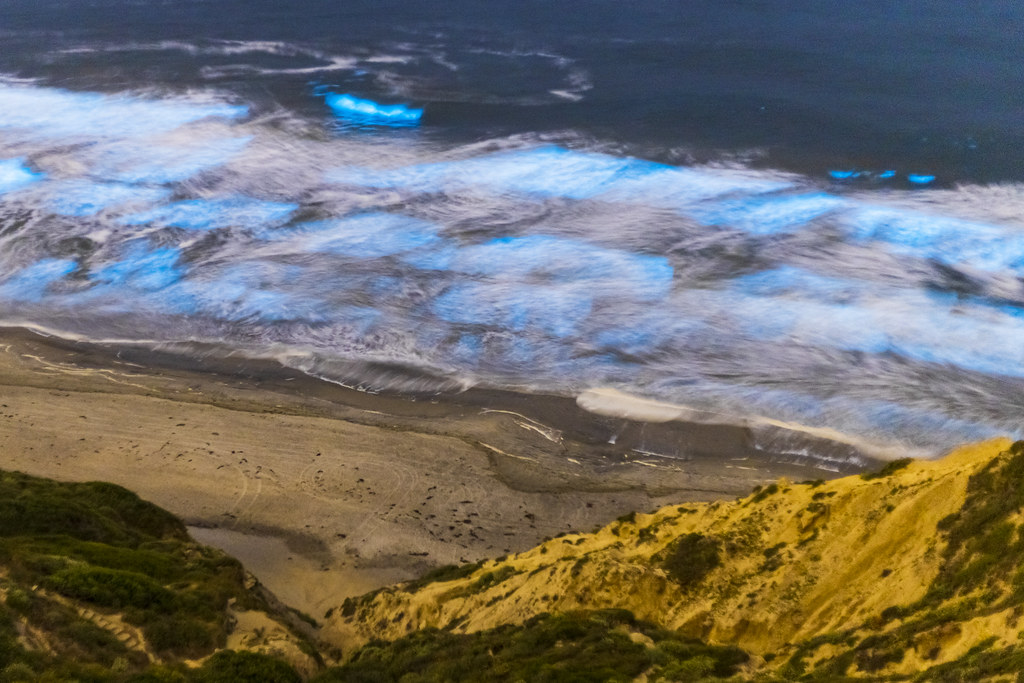
Additionally, Vaadhoo Island in the Maldives is famous for its bioluminescent beaches, where tiny blue points shimmer like stars along the shoreline. This phenomenon is also observed in some Californian beaches, such as La Jolla Cove, and certain coastal areas of Australia under specific conditions. In these locations, the proper environmental conditions (temperature, salinity, and nutrient levels) are ideal for these dinoflagellates to proliferate in vast numbers, ensuring the magic of bioluminescent beaches.
Tourism and Conservation of Bioluminescent Beaches:
Bioluminescent beaches are a huge attraction for tourists worldwide. Kayaking, swimming, or simply walking by the sea at night, when the water lights up, creates an unforgettable experience. Millions of tourists flock to these natural wonders each year, contributing significantly to the local economy. However, this tourism industry is also putting pressure on these sensitive ecosystems.
Conservation efforts are crucial to protect this natural phenomenon long-term. Light pollution, water pollution, and vessel traffic can reduce the number of dinoflagellates. In Puerto Rico and other locations, some bays have been declared protected areas, where motorized vessels are banned, and tourists must adhere to specific rules. Maintaining ecological balance is essential to preserve the beauty of these bioluminescent beaches for future generations.
Environmental Importance and Future Research:
Bioluminescent organisms not only produce natural beauty but also possess immense environmental importance. They are an integral part of the marine food chain and serve as indicators of ocean health. Researching the behavior of these microorganisms and their light production process helps scientists gain deep knowledge about marine ecosystems, chemical reactions, and potential new biotechnological applications. The existence of bioluminescent beaches is a testament to their vital role.
In the future, new technologies could be developed using this bioluminescent feature, such as bio-light sources, biosensors, or even applications in the medical field. In the depths of the ocean where sunlight doesn’t reach, bioluminescence helps creatures communicate, hunt, or defend themselves from predators. Further research into the capabilities of these tiny organisms will help us understand the environment and biodiversity more deeply, illuminating the secrets behind phenomena like bioluminescent beaches.
Conclusion:
Bioluminescent beaches, where the seawater itself shines like stars in the dark, are an extraordinary and mesmerizing natural event. This bioluminescent scene, seen on islands like the Maldives and Puerto Rico, is the result of chemical reactions carried out by tiny marine microorganisms called dinoflagellates. It is not only a wonderful experience for tourists but also an important natural process that plays an essential role in the marine ecosystem. Ensuring the preservation of these bioluminescent beaches is everyone’s responsibility so that future generations can also witness this magical spectacle and scientists can continue to unveil the mysteries hidden within.