
Easy Science Projects for School:
School science projects are fantastic for sparking curiosity and helping students grasp scientific concepts in a hands-on, practical way. Instead of grappling with complex formulas or intricate research, they can learn fundamental scientific principles through simple experiments. These projects not only reinforce textbook knowledge but also cultivate an inquisitive mind and problem-solving skills in students. Many engaging science projects can be created using common household items, which helps to alleviate any apprehension students might have towards science.
Creating a science project is a joyful process. It provides students with an opportunity for hands-on learning and ignites their interest in discovering something new. A successful science project doesn’t demand expensive materials; rather, it calls for a bit of creativity and a keen desire to observe. These projects encourage students to collaborate in groups and foster a learning environment through discussions and debates. Easy Science Projects for School also significantly boost students’ confidence, as they get to build something themselves and understand the science behind it.
- Lemon Battery (Easy Science Projects for School: Lemon Battery)
This project simply explains the basic concept of electricity. For this, you’ll need a few lemons, copper wire, zinc nails, a small LED bulb, and some connecting wires (crocodile clips). The lemon acts as an acidic medium, facilitating a chemical reaction between the zinc and copper that generates a flow of electrons. This is a classic example of Easy Science Projects for School.
First, soften the lemons a little to help the juice inside move easily. Then, insert a zinc nail and a piece of copper wire into each lemon. Ensure that the zinc nail and copper wire do not touch each other. Now, connect the zinc nail of one lemon to the copper wire of another lemon using a connecting wire. Continue this process to connect all the lemons in a series. Finally, connect the LED bulb to the zinc nail of the last lemon and the copper wire of the first lemon. You’ll see the bulb light up! This demonstrates that electricity has been generated from the lemons. Through this experiment, students will learn about the basic concepts of power generation and circuits.
- Volcano Eruption (Easy Science Projects for School: Volcano Eruption)
This project illustrates the concept of gas production and pressure increase through a chemical reaction. You’ll need a plastic bottle, baking soda, vinegar, dish soap (liquid detergent), red food coloring, and a tray. To create a small model volcano, you can use cardboard or clay and place the bottle at its center. This is one of the most visually engaging Easy Science Projects for School.
First, add two tablespoons of baking soda into the bottle. Then, add a few drops of dish soap and red food coloring. Now, take some vinegar in a container and slowly pour it into the bottle. You’ll see red foam erupting from the bottle in an instant, just like a volcanic eruption! The baking soda (sodium bicarbonate) and vinegar (acetic acid) combine to produce carbon dioxide gas, which pushes the foam outwards. This is a fun and visually striking project that clearly explains the concepts of chemical reactions and gas production.
- Creating a Rainbow (Easy Science Projects for School: Creating a Rainbow)
This project explains the principles of light refraction and dispersion. For this, you’ll need a clear glass of water and a flashlight or direct sunlight. This is a very simple yet fascinating experiment that teaches students about the properties of light. It’s a colorful addition to Easy Science Projects for School.
First, fill the glass halfway with water. Now, place the glass on a table where direct sunlight falls. If sunlight isn’t available, you can use a flashlight. Shine the flashlight through the side of the glass of water in such a way that the light passes through the water and falls onto a white wall. You will see a beautiful rainbow on the wall. The water molecules act like a prism, breaking down white light into its component colors (red, orange, yellow, green, blue, indigo, violet). Through this process, students gain direct experience with the refraction and dispersion of light.
- Air Pressure Experiment (Easy Science Projects for School: Air Pressure Experiment)
This project explains the concepts of air pressure and vacuum. For this, you’ll need a glass, water, and a sturdy cardboard piece or postcard. This experiment is very simple, and its results will astonish the students. It’s a great example of Easy Science Projects for School that demonstrates powerful natural forces.
First, fill the glass completely with water. Then, place the cardboard over the mouth of the glass, ensuring no air can enter. Now, carefully press the cardboard with your hand and invert the glass. Slowly remove your hand. You’ll see that the cardboard doesn’t fall from the glass, and the water doesn’t spill out! This happens because the external atmospheric pressure pushing up on the cardboard is greater than the weight of the water inside the glass. When the glass is inverted, a small amount of air gets trapped inside, creating a slight vacuum. This experiment powerfully demonstrates the strength of atmospheric pressure.
- Flower Color Absorption (Easy Science Projects for School: Flower Color Absorption)
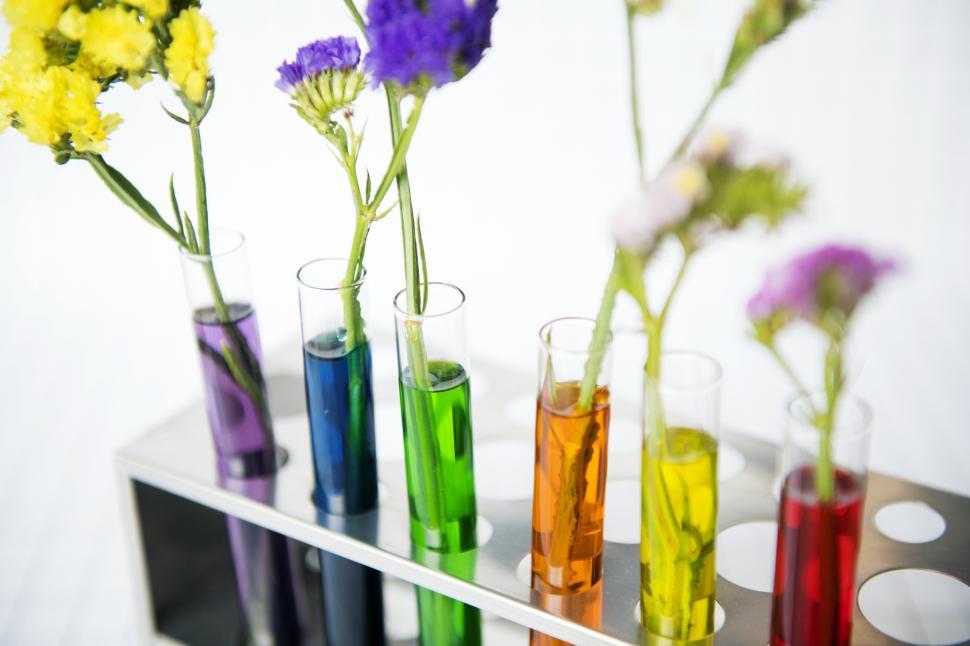
This project demonstrates the process of water and color absorption by plant stems through capillary action. You’ll need white flowers (such as roses or carnations), a few glasses, water, and various colors of food coloring. This project clearly illustrates the plant’s water transport system. This is a beautiful and insightful Easy Science Projects for School.
First, cut the stems of the white flowers diagonally to enable them to absorb water easily. Now, take water in several glasses and mix different colors of food coloring into each. Use a separate glass for each color. Then, place one white flower into each glass. Within a few hours or a day, you’ll observe that the petals of the flowers are changing to match the color of the water! This occurs because the narrow tubes called xylem within the plant’s stem transport the colored water up to the flowers through capillary action. This is an excellent example of the plant’s water absorption and transportation mechanism.
In conclusion, these Easy Science Projects for School are more than just simple experiments; they are an excellent means of fostering an interest in science among students. Through hands-on work, they not only learn scientific principles but also acquire crucial skills such as observation, analysis, and problem-solving. These projects make science enjoyable and understandable, laying the foundation for their future scientific explorations. Every successful experiment boosts their confidence and inspires them to learn new things. Therefore, such simple science projects play a vital role in students’ educational lives and cultivate a lifelong love for science.